






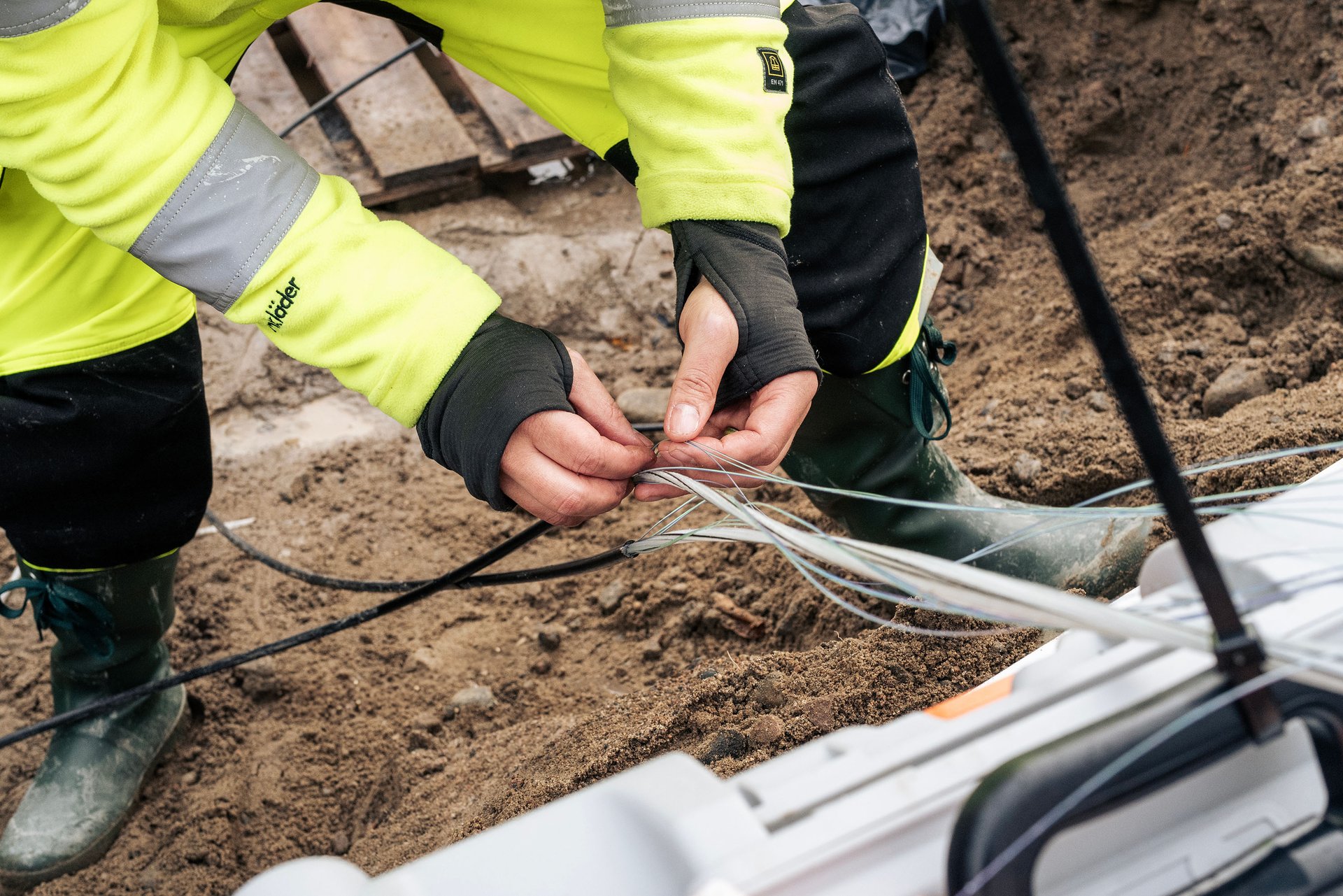



Splicing the wrong fiber pair is easy to do and costly to fix. The color on each fiber and tube is what keeps you on the right one, but the scheme changes from country to country and standard to standard. This guide brings the main fiber optic cable color coding standards together in one place, with the full sequences and the counting rules that installers and planners rely on in the field.
What is fiber optic cable color coding?
Fiber optic cable color coding is a system that gives every fiber and tube a set color so you can identify it during splicing and termination. The color tells you the fiber's position in the sequence. Get the sequence right, and you connect the correct fibers at both ends, every time.
Color matters because a single cable can hold hundreds of fibers. Without a shared scheme, a splice becomes guesswork. The catch is that the scheme depends on the standard, and the standard depends on where you are and who built the network.
Why the standard matters before you splice
Different regions follow different color standards, so confirm the standard before you cut. A fiber numbered 5 is slate in one scheme, yellow in another, and white in a third. If you assume the wrong standard, you splice the wrong pair.
Check the cable datasheet or the network documentation first. When you work across borders or inherit a legacy network, this one step saves hours of fault-finding later.
TIA/EIA-598 color code
TIA/EIA-598 is the most widely recognized fiber color standard worldwide, often called the Bellcore code. Because it comes from the United States, the colors use US English names such as slate (grey), rose (pink), and aqua (turquoise). It runs a 12-color sequence, then repeats it for fibers 13 to 24 with one ring mark added, and for 25 to 36 with two ring marks added.
| Fiber | Color |
|---|---|
| 1 | Blue |
| 2 | Orange |
| 3 | Green |
| 4 | Brown |
| 5 | Slate |
| 6 | White |
| 7 | Red |
| 8 | Black |
| 9 | Yellow |
| 10 | Violet |
| 11 | Rose |
| 12 | Aqua |
For fibers 13 to 24, repeat colors 1 to 12 with a ring mark. For 25 to 36 repeat the colors with two ring marks. Fibers 20 and 32 are left clear, since a ring mark would not show on the black fiber.
S12 color code
S12 is the Swedish standard from 2012, introduced by Skanova for micro and nano cables, and now used in Sweden and beyond. It runs a 12-color sequence that repeats with ring marks for higher fiber counts.
| Fiber | Color |
|---|---|
| 1 | Red |
| 2 | Blue |
| 3 | White |
| 4 | Green |
| 5 | Yellow |
| 6 | Grey |
| 7 | Brown |
| 8 | Black |
| 9 | Violet |
| 10 | Orange |
| 11 | Turquoise |
| 12 | Pink |
For fibers 13 to 24, repeat colors 1 to 12 with a ring mark. For 25 to 36 repeat the colors with two ring marks. Fibers 20 and 32 are left clear.
DIN-0888 color code
DIN-0888 is the standard used across Germany, Switzerland, Austria, and Denmark. The sequence differs from both TIA-598 and S12, so do not carry assumptions over.
| Fiber | Color |
|---|---|
| 1 | Red |
| 2 | Green |
| 3 | Blue |
| 4 | Yellow |
| 5 | White |
| 6 | Grey |
| 7 | Brown |
| 8 | Violet |
| 9 | Turquoise |
| 10 | Black |
| 11 | Orange |
| 12 | Pink |
For fibers 13 to 24, repeat colors 1 to 12 with a ring mark. For 25 to 36 repeat the colors with two ring marks. Fibers 22 and 34 are left clear.
FIN2012 color code
FIN2012 is the Finnish standard. It uses its own 12-color order, again repeating with ring marks above fiber 12.
| Fiber | Color |
|---|---|
| 1 | Blue |
| 2 | White |
| 3 | Yellow |
| 4 | Green |
| 5 | Grey |
| 6 | Orange |
| 7 | Brown |
| 8 | Turquoise |
| 9 | Black |
| 10 | Violet |
| 11 | Pink |
| 12 | Red |
For fibers 13 to 24, repeat colors 1 to 12 with a ring mark. For 25 to 36, repeat the colors with two ring marks. Fibers 21 and 33 are left clear.
Standard Type E color code
Standard Type E is the older Scandinavian scheme, defined jointly by Televerket, now Telia, and Ericsson. It is used worldwide but is gradually being replaced by S12 and TIA/EIA-598. You still meet it in legacy networks, so it pays to know it.
| Fiber | Color |
|---|---|
| 1 | Red |
| 2 | Blue |
| 3 | White |
| 4 | Green |
| 5 | Yellow |
| 6 | Grey |
| 7 | Brown |
| 8 | Black |
| 9 | Orange |
| 10 | Violet |
| 11 | Pink |
| 12 | Turquoise |
For fibers 13 to 24, repeat colors 1 to 12 with a ring mark. For 25 to 36, repeat the colors with two ring marks. Fibers 20 and 32 are left clear.
Type E tubes are identified by position, not by a full color run. Tube 1 is red, tubes 2 and 7 are blue as direction markers, and the remaining tubes (3 to 6 and 8 to 16) are white. The sequence repeats on each additional tube layer, starting again at tube 1. In slotted core cables, you can instead identify the tube position from the three line markings on the core profile. There are always only three line markings, whatever the number of slots.
Ribbon cable color code
Ribbon cables group fibers side by side, and the colors run in a short repeating sequence across the ribbon. Hexatronic uses the S12 method 1 stripe marking, which matches the Type E ribbon order. Method 1 uses only four colors and the same sequence on every ribbon, so a ribbon is easy to read even in low or monochrome light.
The eight-fiber sequence is: Red, Blue, White, Green, Red, Blue, White, Green.
Counting directions for fibers and tubes
Within a bundle, count fibers 1 to 12 following the color sequence for your standard. The bundle can be a tube, a ribbon, or a yarn-wrapped group, and the same counting logic applies to each.
Above 12 fibers, the sequence repeats for fibers 13 to 24 with a ring mark on each color. For 25 to 36, the color sequence repeats with two ring marks. One fiber in each repeated cycle is left clear, because the ring mark would not show on a black fiber. The clear fiber sits in a different position depending on the standard.
| Standard | Clear fiber position |
|---|---|
| TIA/EIA-598 | 20, 32 |
| S12 | 20, 32 |
| DIN-0888 | 22, 34 |
| FIN2012 | 21, 33 |
| Standard Type E | 20, 32 |
For cables with several tube layers, counting starts in the innermost layer and works outward. The color sequence repeats on each additional layer, starting again at position 1. In Type E cables, every new tube layer starts again at tube 1 (red).
Two habits prevent most errors. Confirm the standard before you start, and note where the clear fiber falls so you do not lose your place in the count.