Fibre products developed in the UK
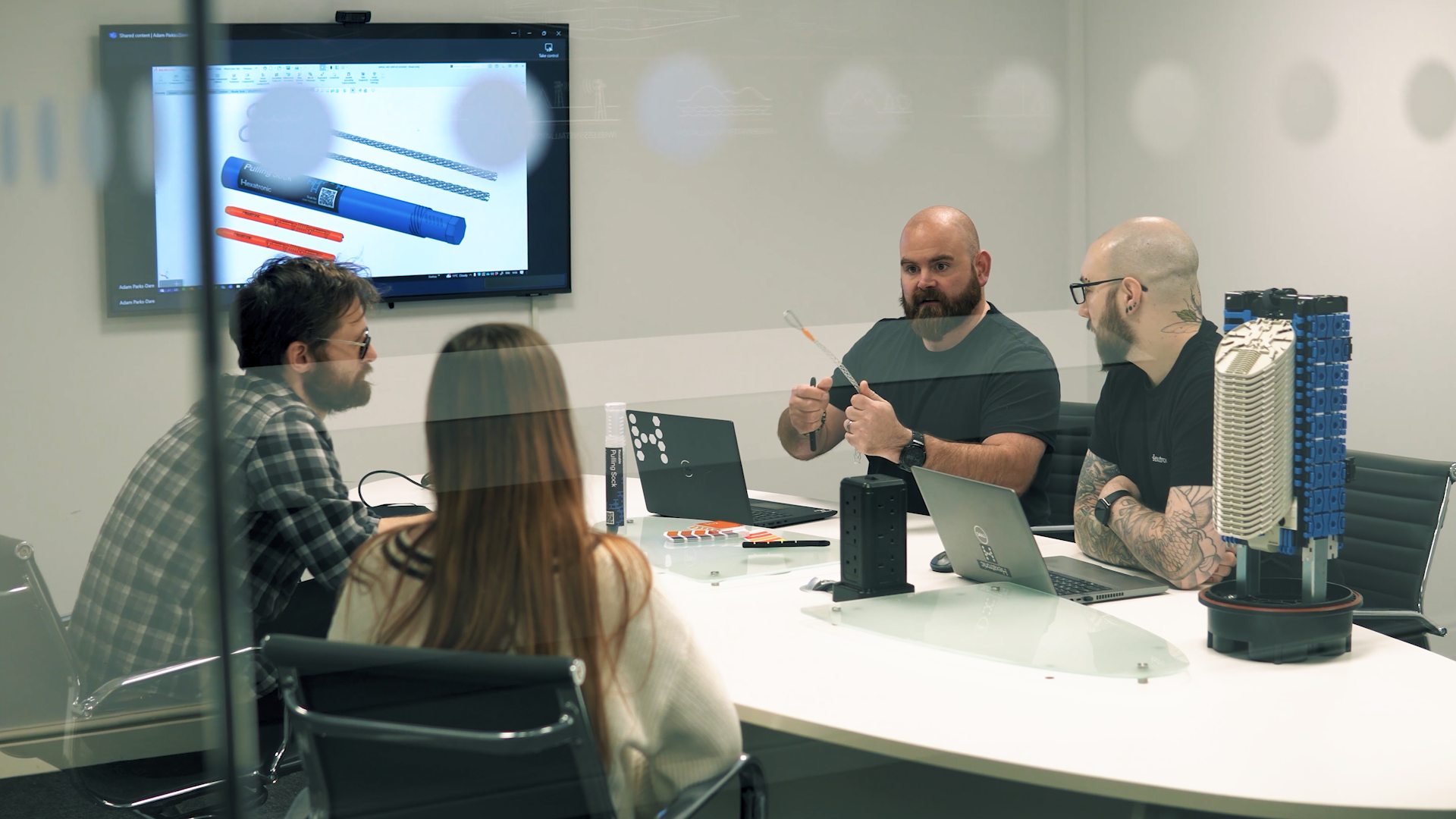
Our UK team develops passive fibre products used across the entire FTTH and FTTx network. These include:
- Termination boxes for SDU and MDU premises
- Underground and overhead nodes
- Cabinets and enclosures
- Fibre closures and connectivity solutions
Operators can standardise on a single, compatible system from street to premises, reduce maintenance complexity, and ensure installers work with products optimised for their specific conditions.
How customer insight shapes every product we design
Every development project begins by listening. Before the design process kicks off, our team gathers insights from operators, installers, planners, and support teams to understand the real obstacles that slow down deployment or increase operational costs. We translate these findings into a clear brief that defines:
- What the product must solve
- How it must perform
- What installation environments it needs to withstand
In the end, these products solve specific, on‑site challenges such as cramped premises, harsh weather exposure, tight civil work timelines, or variable duct conditions. Nothing is designed in isolation. Everything is built to support smoother installations and fewer return visits.
How ideas become prototypes with real‑world impact
Once a brief is defined, it is time to develop the initial concept. The team brainstorms various solutions, evaluates their feasibility, and identifies any potential problems. The engineers then move from concepts to prototypes. Multiple design routes are explored and validated using advanced modelling tools that predict performance before physical testing begins. Rapid 3D‑printed and fast‑turn prototypes enable testing assumptions early and identifying potential risks without delaying the development cycle.
The result is faster iteration, reduced time to market, and solutions that have already been validated before they reach installers in the field.
Balancing performance, cost, and sustainability
Operators expect durable, simple‑to‑install products that also meet growing sustainability and tender requirements. Our development process supports this balance by enabling efficient, repeatable manufacturing and responsible material selection with full supply‑chain transparency.
More than 80% of the products manufactured in the UK today use recycled plastics — helping operators meet ESG targets, strengthen bids, and reduce environmental impact while maintaining long‑term reliability and cost‑effectiveness.
Testing that reduces deployment risk
Before a product reaches the market, it undergoes rigorous testing both in the lab and in real‑world simulation environments.
- Laboratory testing
Includes temperature cycling, water ingress protection, mechanical strength, and optical performance.
- Field trials
Prototypes are installed in dedicated network environments to confirm long-term durability and ease of installation.
This quality assurance process reduces the risk of callouts, installation errors, and premature failures. It means your teams install solutions proven to perform in real conditions, not just ideal scenarios.
Why local UK R&D matters for network operators
Being part of a global group gives us reach, and being local gives us speed and precision. With design, manufacturing, and testing all happening on site in the UK, operators benefit from shorter lead times, rapid iteration, and direct collaboration with the people developing their solutions. Products can be adapted to UK regulations, installation methods, and deployment conditions — resulting in fewer surprises in the field and faster, more predictable projects.