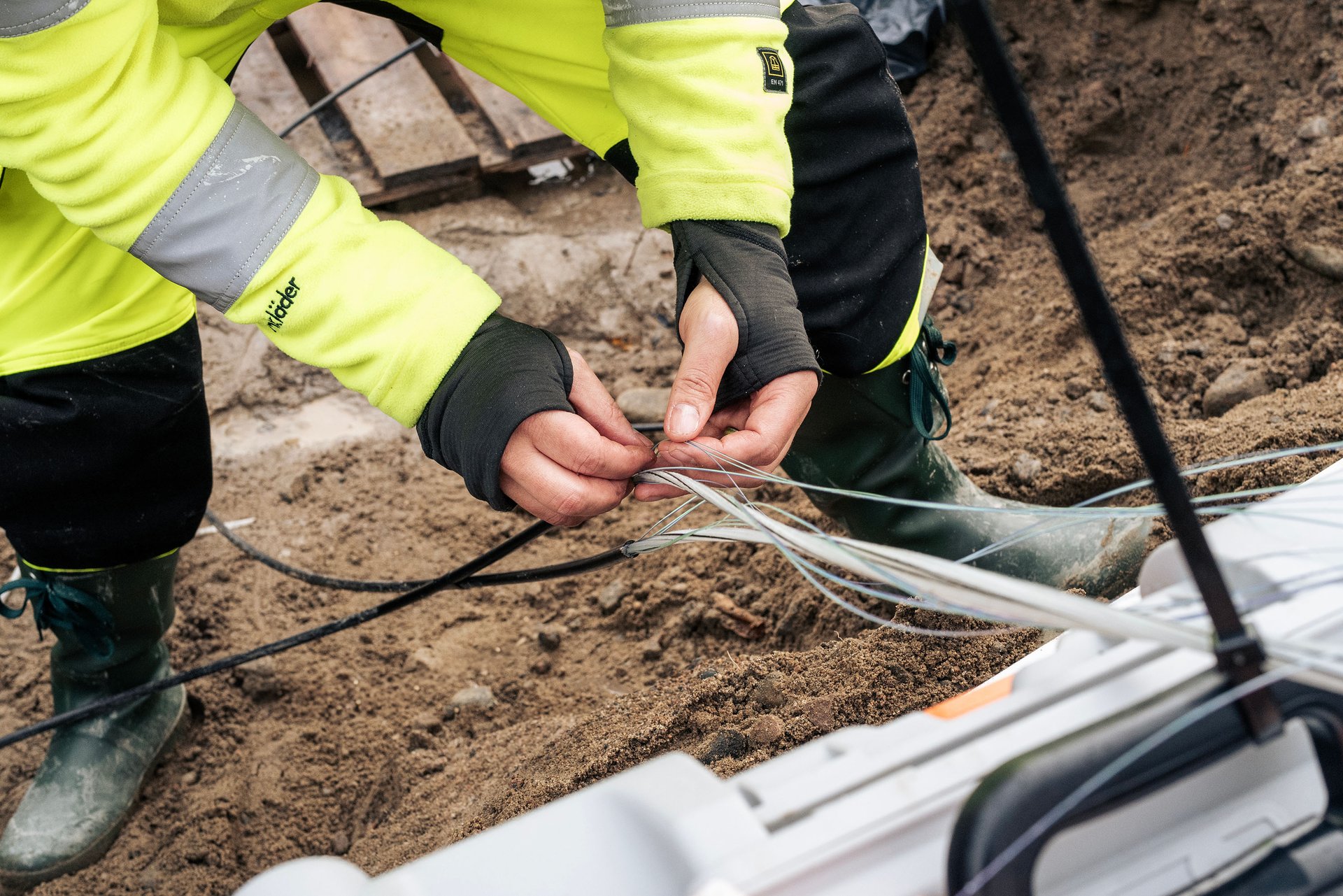
Air-blown cabling is today widely used across most fiber network deployments, from FTTH to data centers and increasingly in transport networks. With recent developments in micro cabling systems, air-blown solutions now cover the majority of application areas that were previously served by traditional cabling. Micro cable innovation has made traditional cabling largely obsolete, limiting its role to a small number of edge cases or highly demanding specialized applications.
While there have been many advances in recent years, blown fiber cable is not a new technology, although it is relatively new compared to conventional cabling methods that date back to Alexander Graham Bell. But, even if the air-blown technology offers many indisputable advantages, there are still a few specific scenarios where traditional cabling may be considered. Here I explain why.
Blown fiber cables enter the market
The earliest known version of blown fiber cable (using compressed air to push fiber cabling through tubes) is found back in the 1980’s. The technique of installing flexible and lightweight fiber optic units using compressed air was further developed by British Telecom. These systems are installed in many environments – from fiber-to-the-home (FTTH) to hospitality to healthcare and to enterprise campuses. Previously, blown cable had a niche in special environments, but today they are gaining popularity due to significant advantages over conventional fiber optic cabling.
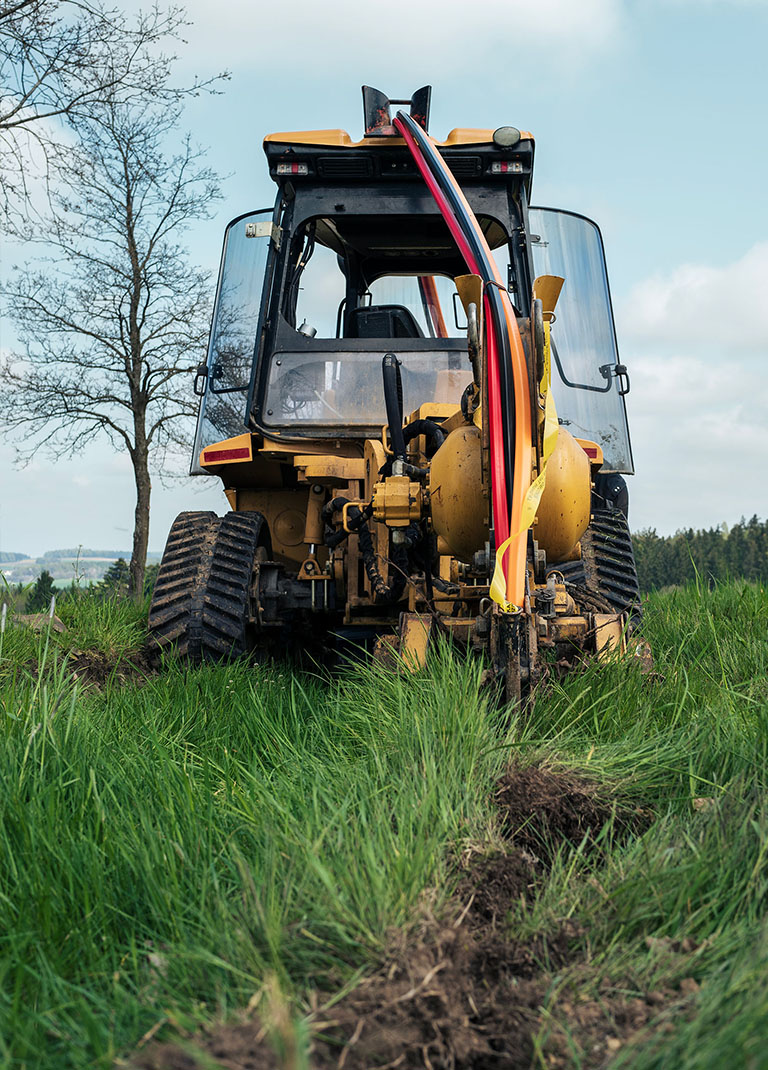
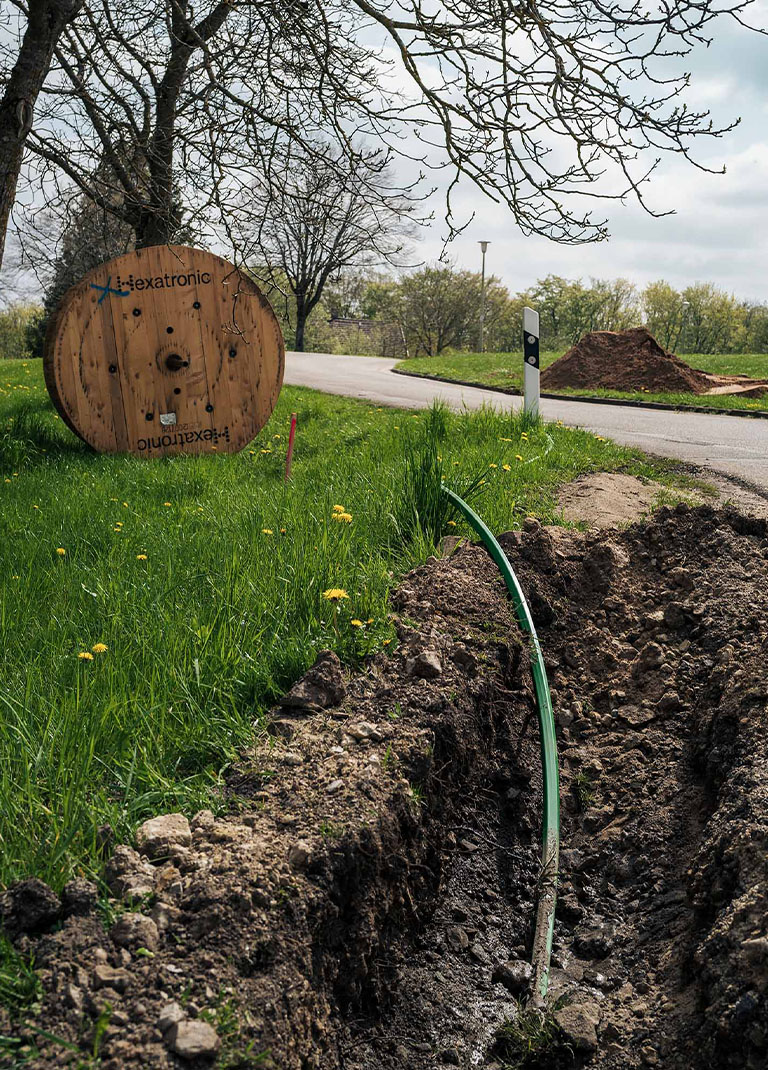
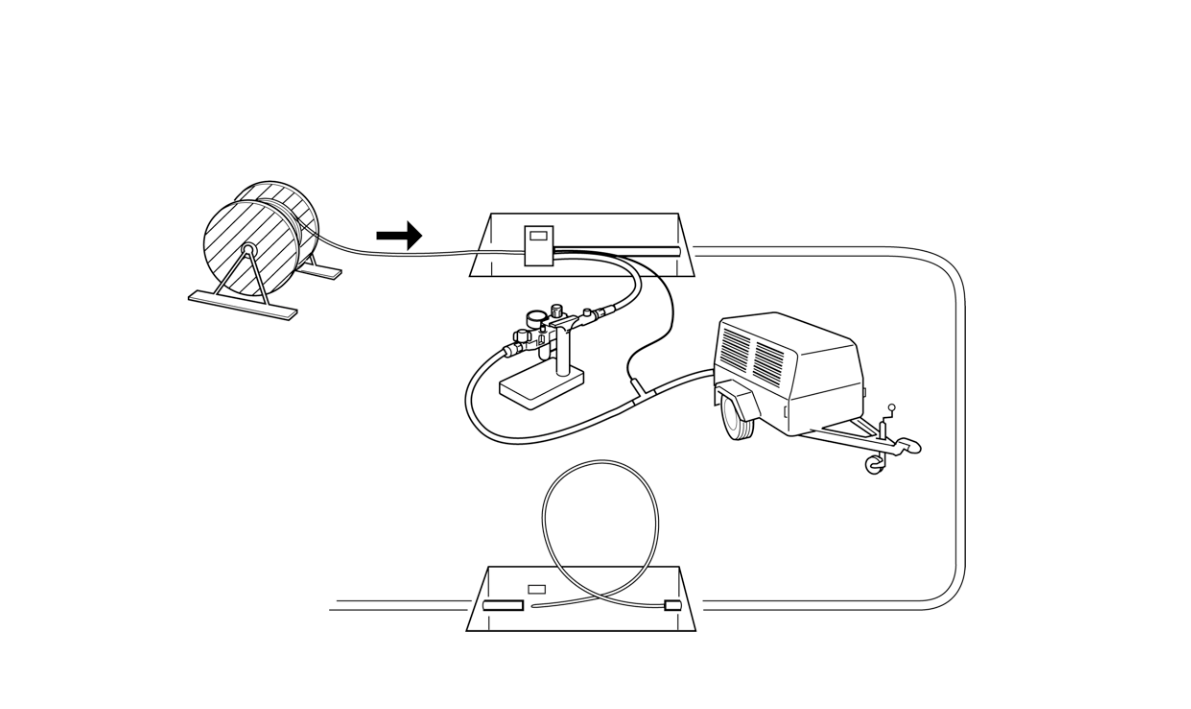
In comparison with traditional cabling techniques such as direct installed cables or cables pulled in conduits, air blown cabling utilizes small microtubes or microducts to blow (or “jet”) lightweight optical fiber bundles or micro cables through predefined routes at rates up to 500 feet per minute (150 m/min). The micro tubes are manufactured of tough, flexible materials and bundled in groupings of up to 24 units within a conduit that can be installed above ground aerially or underground or even within the building.
In many modern network deployments, air-blown cabling is now considered the default approach. The differences become clearer when comparing typical network requirements.
| If your network needs... | The typical choice is... |
| Scalability and long-term flexibility | Air-blown cabling |
| Fast deployment and minimal disruption | Air-blown cabling |
| High fiber count or evolving capacity | Air-blown cabling |
|
Transport or long-distance capability with flexibility
|
Air-blown cabling |
| Fixed, well-defined structure with no expected changes |
Traditional cabling (in limited cases)
|
|
Highly specialized installations (e.g. submarine)
|
Traditional cabling |
What is the point?
So, what is the point of first laying pipes in the ground and then blowing in the fiber cables? It seems to be a two-step operation instead of just laying the cables directly into the ground. To understand this, we need to understand how these tubes are installed. These tube bundles contain color-coded cells or microducts through which the optical fiber bundles are blown. Using couplers, installers connect individual micro cable cells together in tube distribution points, to provide routes through which fiber is blown to achieve a splice-free, point-to-point installation. A splice-free installation saves installation time and improves overall system reliability, which further is enhanced because no strain is placed on the fiber during the installation process.
There is more to this approach. The ducts are installed separately and in advance, which means:
- Enables incremental fiber installation based on demand
- Reduces strain on fiber during installation
- Minimizes splice points and installation time
- Simplifies network upgrades with additional fiber
- Supports a more flexible network design

The benefits
Blown micro fiber cable technology offers great benefits for quick and easy incremental installations of cables. The capacity of the network can quickly be increased by inserting new cables in spare microducts when needed. The system also minimizes the number of fiber splice joints in the network compared to traditional cable solutions. The blown fiber technique guarantees high performance and reliability.
Where to use air-blown cabling
Today, air-blown cabling is no longer limited to access networks, but has become a versatile solution used across most parts of modern fiber infrastructure, including areas traditionally served by conventional cabling.
FTTH - Blown micro fiber cable systems are fast becoming the preferred system of choice in access networks, where cost of homes passed, speed of deployment, flexibility, and future scalability is of utmost importance. Today, blown fiber to the home is being adopted as the preferred architecture for access networks -- AKA the “last mile” – delivering telecommunications service to end-user’s premises. Learn more about FTTH network design and deployment.
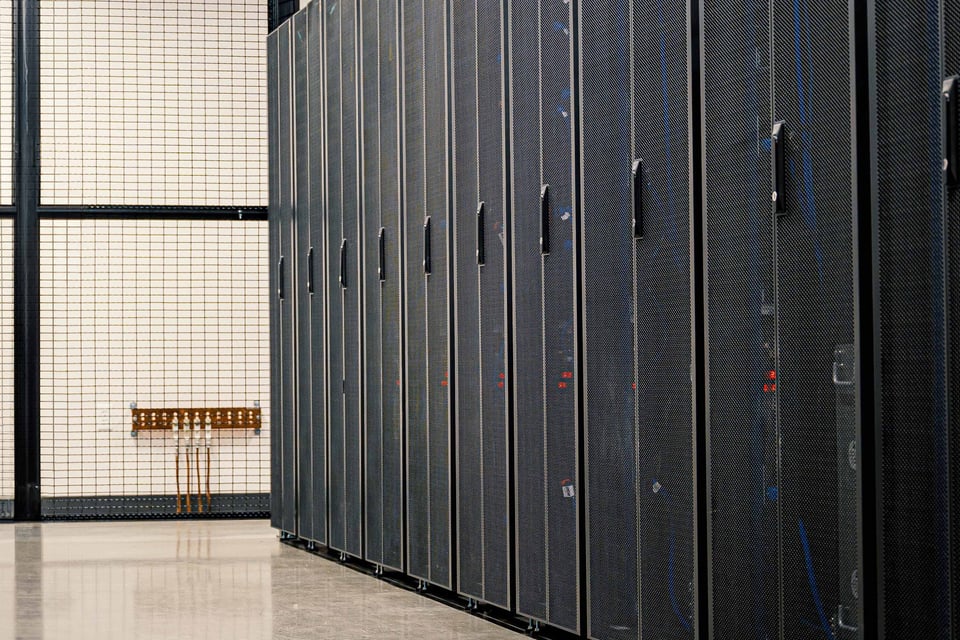
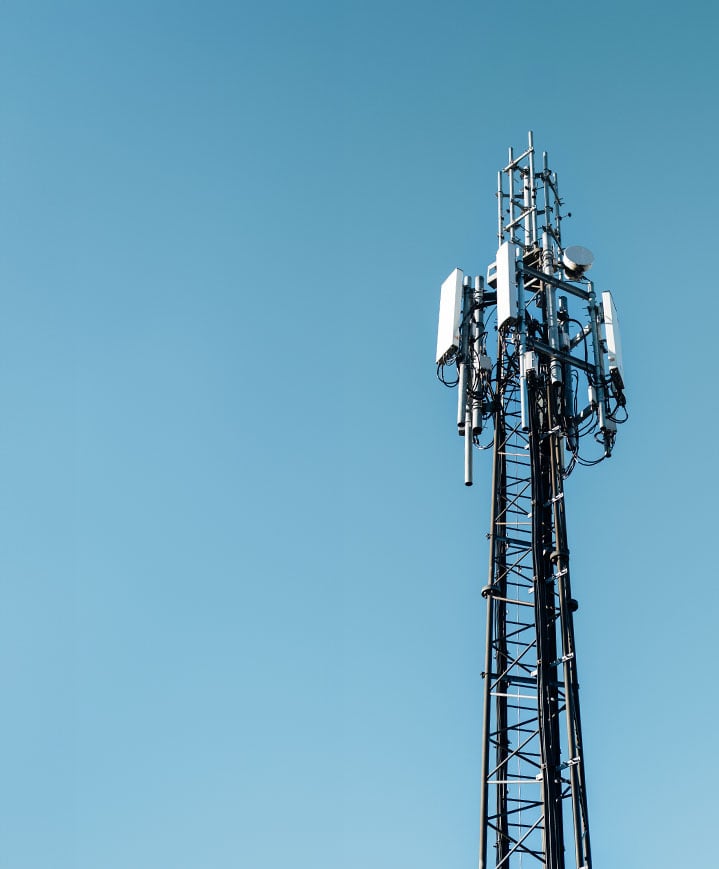
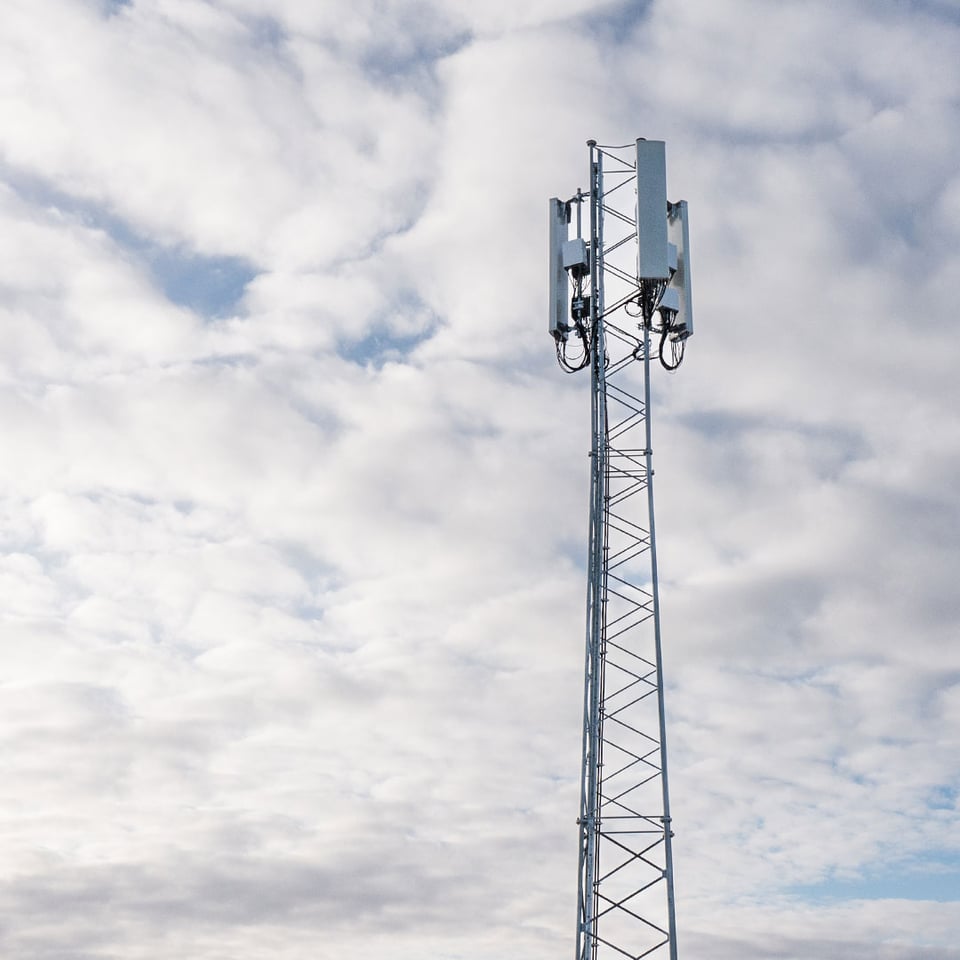
Datacenters and 5G - Air-blown cabling is also well suited for data centers, 5G, or other networks requiring high fiber count connections between two points. Sometimes several thousand fibers are required and by using multiple cables blown into micro tubes, the installation will be faster and safer. It is also easier to build a redundant network.
Recent developments in micro cabling systems have further expanded the applicability of air-blown solutions in transport and long-distance networks. For applications requiring high fiber density and extended reach, systems such as the Viper Core Micro Cabling enable air-blown solutions for applications previously considered suited only for traditional cabling.
Note that blown fiber and micro tubes are equally suitable for outdoor use as well as indoor use. For indoor applications, flame retardant micro tubes are used.
Where to use traditional cabling
While air-blown cabling systems today cover most application areas, there are still a few specific scenarios where traditional cabling may be considered.
In trunk networks with very simple, linear routes and fully defined capacity from the outset, traditional cabling may still be used. However, as air-blown solutions continue to evolve, they are increasingly being evaluated even in these types of networks, particularly where future flexibility or scalability may become relevant over time.
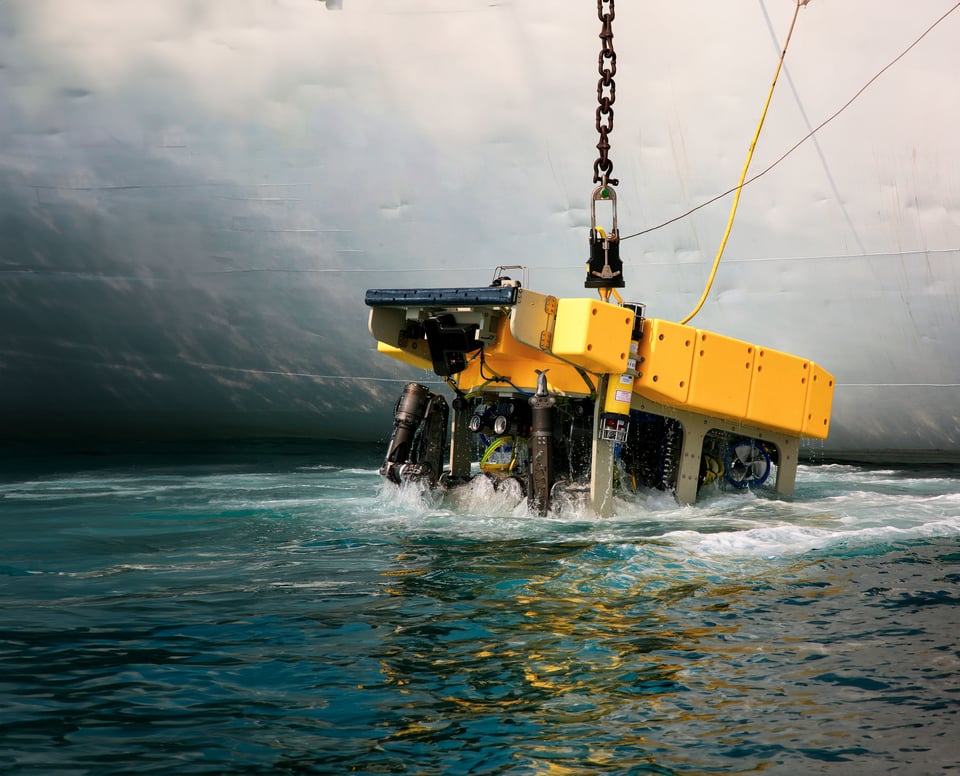
For certain long-distance or highly specialized installations, such as submarine cables, traditional solutions remain widely used due to their structural requirements and operating conditions.
Conclusion
To conclude, air-blown cabling has evolved from a niche solution into the standard approach for most modern fiber network deployments, offering flexibility, scalability, and reduced total cost of ownership.
While traditional cabling still has its place in a limited number of scenarios, the continued development of micro cabling systems is rapidly expanding the range of applications for air-blown technology.
For a detailed comparison, download our whitepaper: Comparison of micro cabling and traditional cabling systems.