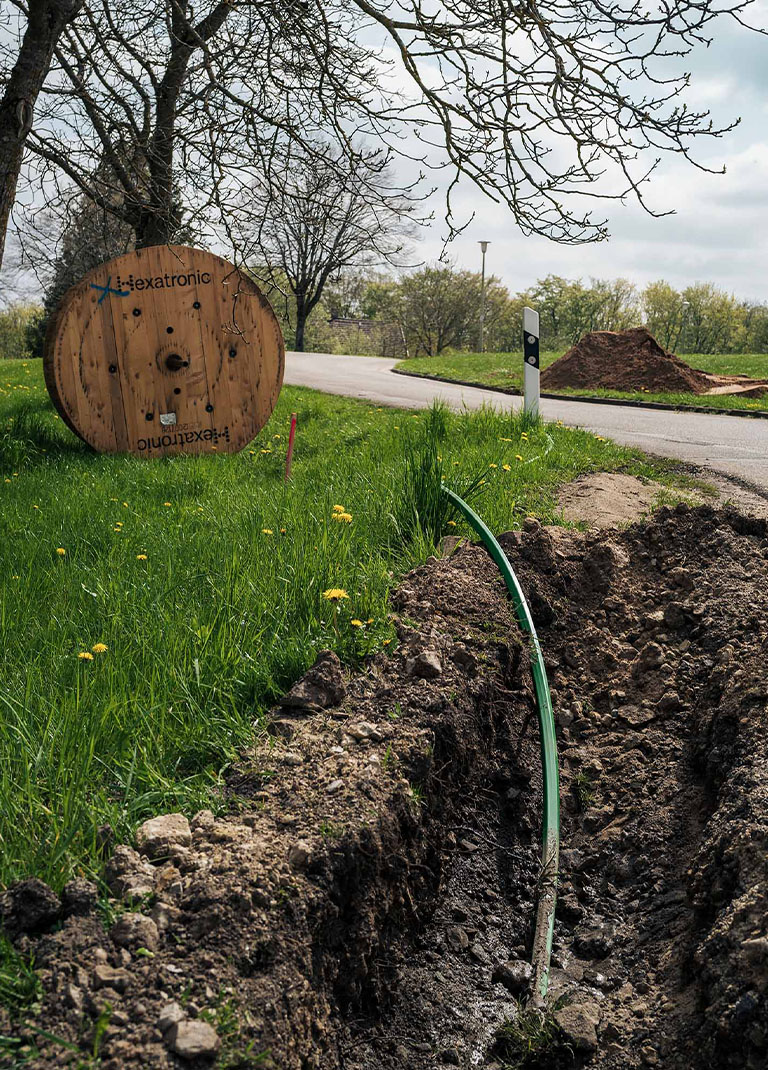
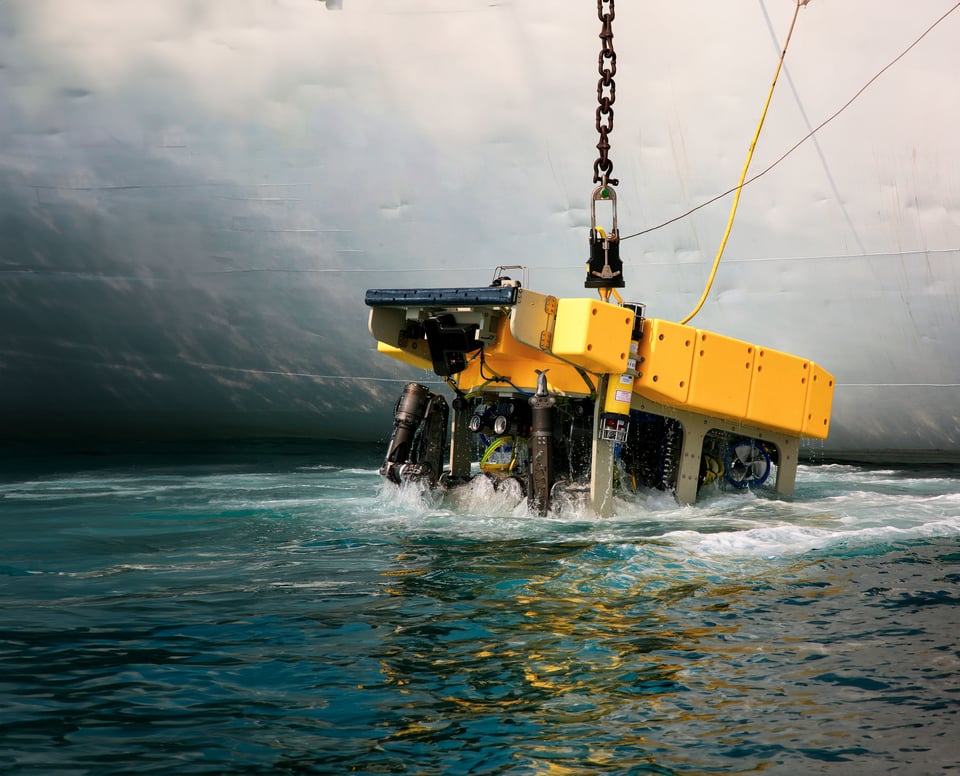






For longer distances, fiber-optic cables are typically installed by hanging them between poles (aerial), laying them on the seabed (submarine), or burying them in the ground (underground). The specific environmental conditions of a project determine which method – or combination of methods – is the best fit.
This article explains the most common methods for installing fiber optic networks in the ground and the key factors that influence the choice of approach. We take a closer look at the challenges and advantages of underground installation, and why it remains the most widely used option for fiber network builds.
Fiber optic network installation - a complicated task
In general, techniques that require basic skills will, in turn, offer significant benefits: lower total cost of ownership, better performance, and scalability.
Today, several fundamentally different cabling techniques exist for fiber-optic networks. Each method differs in cost, speed, equipment requirements, and suitability depending on soil conditions and the surrounding environment. Some examples are;
- Direct buried cable installation
- Installation by blowing or pulling cables in ducts
- Air-blown installation of tiny micro cables or blown fibers in microducts
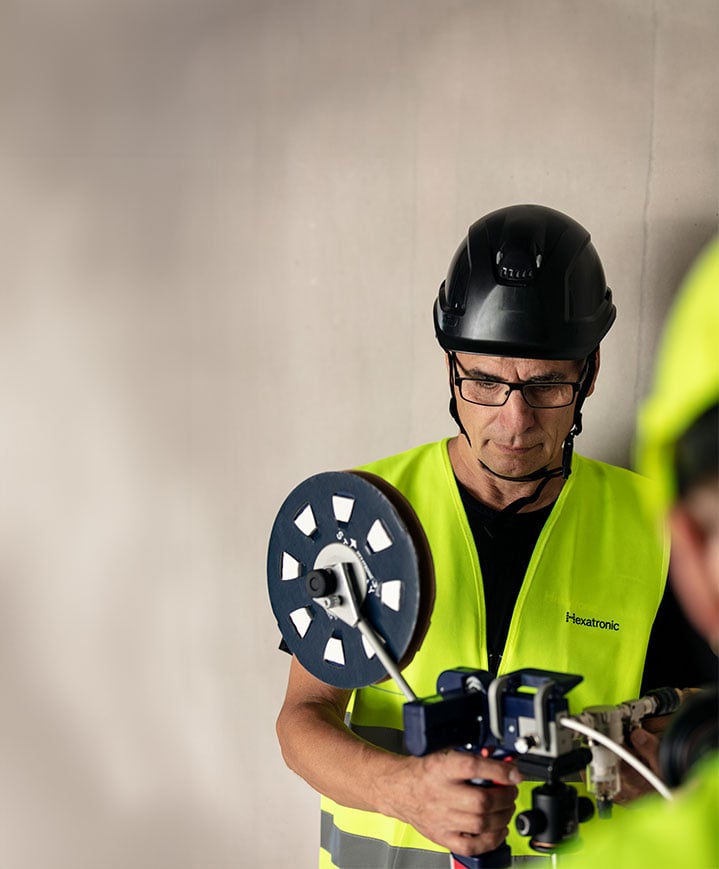
Traditional optical fiber cables can be the safe, old-school technology most installers use, but newer Air blown fiber optic cabling systems for microducts are gaining more interest. The system offers a low total cost of ownership and the ability to grow with user needs.
Regardless of the chosen cabling technique, there are some fundamental installation methods. These can be practiced with direct buried cable as well as for microducts in air-blown cabling projects.
It starts with the installation environment
In the ground, in water, aerial on the poles? Yes, this is the first question.
You may find this question rather self-explanatory, but please think twice! If you have access to poles, you can achieve considerable savings by using them instead of digging trenches for underground installations. Sometimes, a shortcut through a bay with submarine cables can save you miles of digging, and if you can install cables under a bridge, the extra cost of submarine cables can be eliminated. However, most installations are done in the ground, and this is the focus of this article.
There are five commonly used ground-installation methods.
- Traditional trenching
- Mini trenching
- Micro trenching
- Plowing
- Drilling
Generally, # 1 is the most time-consuming and expensive method, and # 5 is the fastest and lowest cost.
So, why wouldn't you always go for the most economical option? There are tons of parameters that define which method is best for a specific application. A low-cost technique like drilling cannot be used in areas with a lot of rocks. It also requires investments in expensive equipment and skilled labour. When installation by plowing is quick, easy, and low cost, making it ideal for rural areas, it is of no use in urban areas with asphalt or paving stones.
Choosing the right installation technique to minimize cost and maintain good quality is a skill and will be covered in other articles. Here, we will look into the methods used for fiber optic cables. Let’s start!
Excavating trench
When performing a direct buried duct, microduct assembly, or cable excavation, it is of utmost importance to ensure the trench is cleared of stones and sharp objects. Then the ducts are to be deployed on top of a fine bedding. After the ducts are deployed, they are covered with sand or fine soil. If there is more than one duct in the trench, one must lay sand between the ducts as well. Finally, a warning tape shall be put on the top of the cover layer. Warning tape of Al or plastic, and a text, is placed 10-20 cm above the duct to minimize breaks from digging. If a plastic warning tape is used, it is possible to track the channel if the tape has a metallic wire. Ensure that the metallic wire is connected together if sections of warning tape are spliced.
Note: If a metallic wire is not present in the warning tape, it is a good idea to include a duct with an integrated tracer wire. A simplified view of an excavated trench is shown in the figure below. Measures in mm.
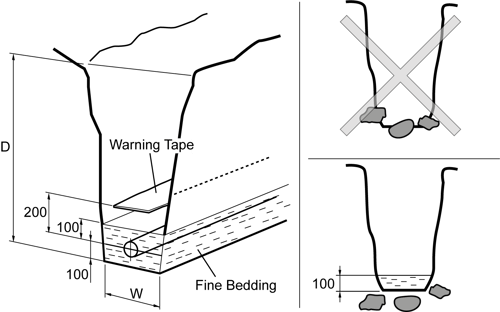
Always check with the network owner or local regulators to verify the correct depth. For reference, some examples of typical D values are shown below:
- Ducts in green areas and pavements shall be at least 0.35 m deep
- For ducts in driving areas, the depth shall be at least 0.55 m
- In regions with ground frost, the trench should be 0.7 m deep or more
- Ducts installed in cultivated areas must be placed so deep that further cultivation does not jeopardize the optical installation, for example, at least 0.8 m
Plowing
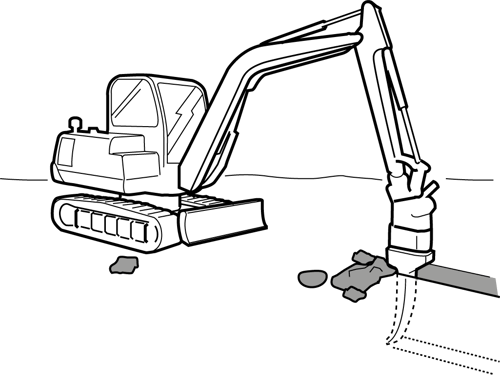
Since the deployment using a plow must be done in one go without stopping the machine, there must be no obstacles in the route. Therefore, pre-plowing is required. The pre-plowing is to be done a minimum of 100 mm deeper than the actual installation depth, as shown in the figure below.
After pre-plowing, duct plowing can proceed. This is done in one go using a static or a vibrating plow, see the figure below. Vibrating ploughs cut the ground more easily and refill more efficiently than a static plough. Therefore, it is recommended to use vibrating ploughs.
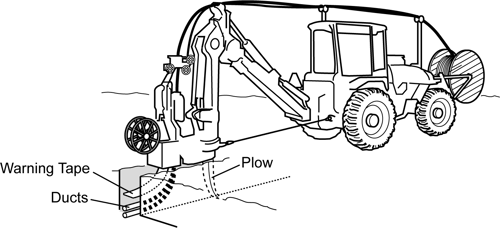
Several ducts can be deployed at the same time, and warning tape, and preferably a trace wire, is placed on the top.
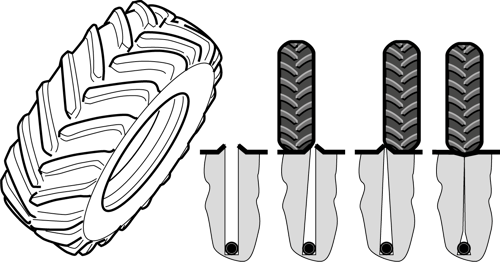
When reinstating the ground after plowing, make sure to restore it to look and have similar properties to before plowing. This can, for example, be done by driving with the machine where the plowing took place. First on one side of the track, then on the other side, and lastly on the top, as shown below. Also, make sure to remove all visible rocks.
Mini Trenching and Micro Trenching
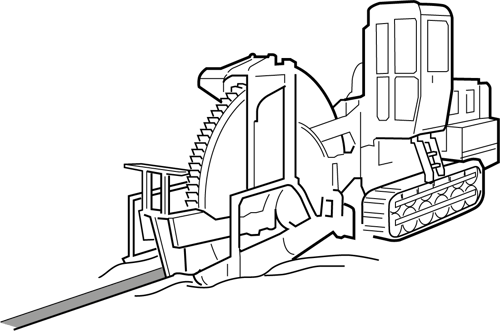
The mini- and micro trenching technique comes in different forms and uses various machines. The advantages of this technique over conventional cable laying technologies lie primarily in its speed of execution, lower cost, significantly lower environmental impact, and limited disruption to road traffic, and, as a consequence of the previous items, ease in obtaining permits for the taking over of the public area. Typical mini- and micro trenching machines are shown below.

The difference between mini- and micro-trenching generally lies in the trench profile. The smaller profile of micro trenching offers lower cost, but also less space for ducts and less robust protection. Typical trench profiles from mini- and micro-trenching are shown below. Measures in mm.

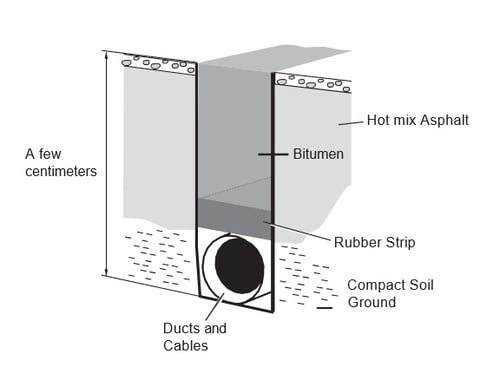
When reinstating the asphalt after installation, make sure to restore the ground to have a similar appearance and properties to those before trenching. Reinstatement after mini trenching is done with concrete or foam concrete as backfill, with Bitumen on top. Micro trenching is done with a rubber strip on the top of a duct, and then Bitumen on the top.
Horizontal directional drilling
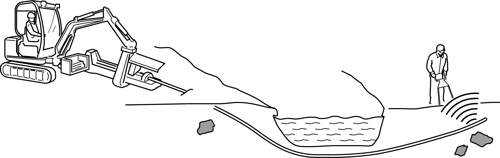
Horizontal directional drilling is a beneficial method for deploying ducts. It is commonly used when deploying ducts under roads or water. The method is normally done in the following steps:
- Perform a survey with ground radar. This is to identify potential obstacles in the ground, such as existing cables, water pipes, and sewers.
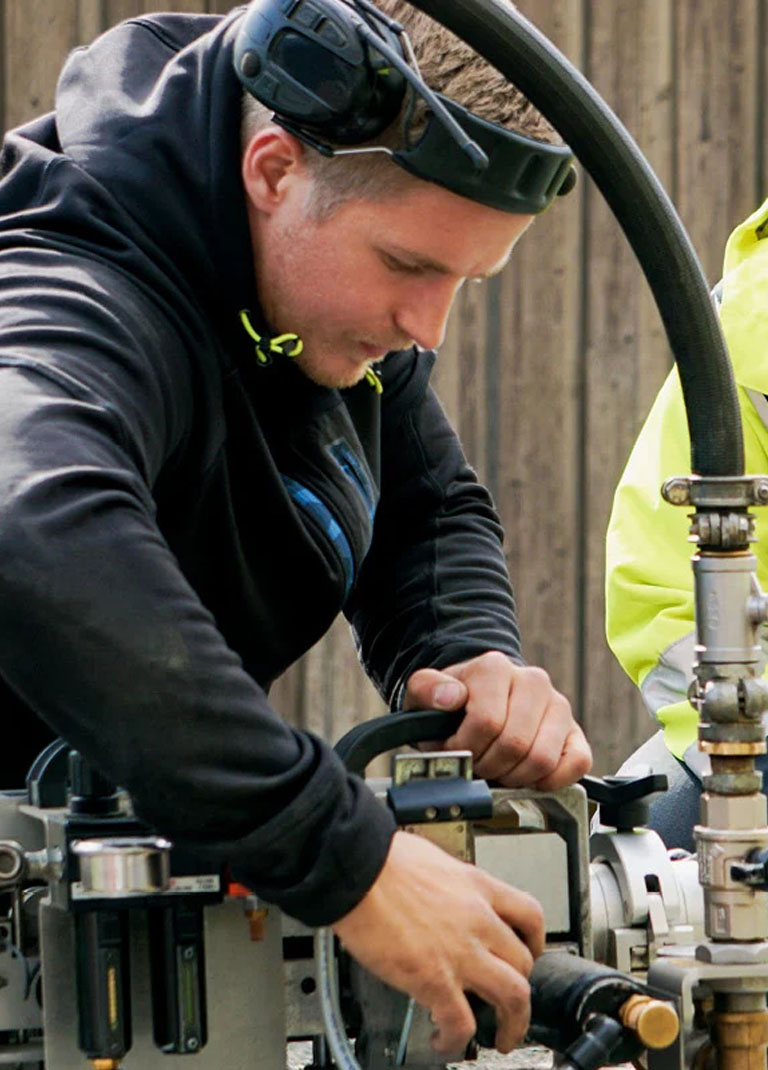
- Perform the drilling in a team of two: one person using the drilling machine and the other using the locating device to track the drill head. Drilling begins with a small-diameter pilot hole at the entry side of a project site. Bentonite is commonly used to stabilize the hole.
- Replace the drill head. Once the drill comes through, replace the drill head with a mandatory swivel and an optional reamer. The swivel prevents the duct from rotating on the way back, and the reamer widens the drill hole.
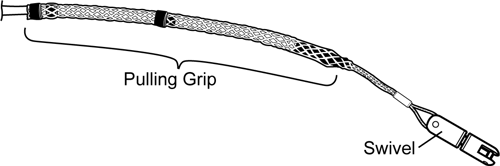
- Attach a pulling grip and a swivel, and tie the pulling rope to the swivel on the pulling grip with a strong knot.
- Pull the duct (or cable) through the hole.
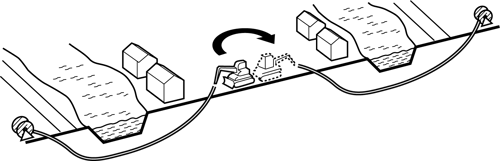
To make installation fast and efficient, it is common to drill a hole in one direction, pull the duct through, then turn the machine around and drill a hole in the opposite direction, and pull another duct through (see figure below). This way, the equipment is moved as little as possible, saving time and, if applicable, reducing the cost of renting the drilling machine.
Then what?
After successful installation, it is time to do the rest. In access networks such as Fiber To The Home, it is essential to make duct branches to extend ducts to each end user. Cabinets and closures for splitters are installed, and finally, the cables or blown fibers are installed in the ducts. All these steps are equally important and will be handled in other articles.