






As the need for new and upgraded transport networks continues to increase globally, installers need solutions that are easy to handle, keep projects on schedule, and support long-term capacity planning. Micro cabling has proven to be a strong fit for these demands. It brings lighter materials, longer installation distances, and a more flexible network design that adapts as requirements evolve. This article explores the key reasons installers increasingly prefer micro cabling systems, drawing on insights and data from Hexatronic’s research and field experience.
Simpler handling speeds up work in the field
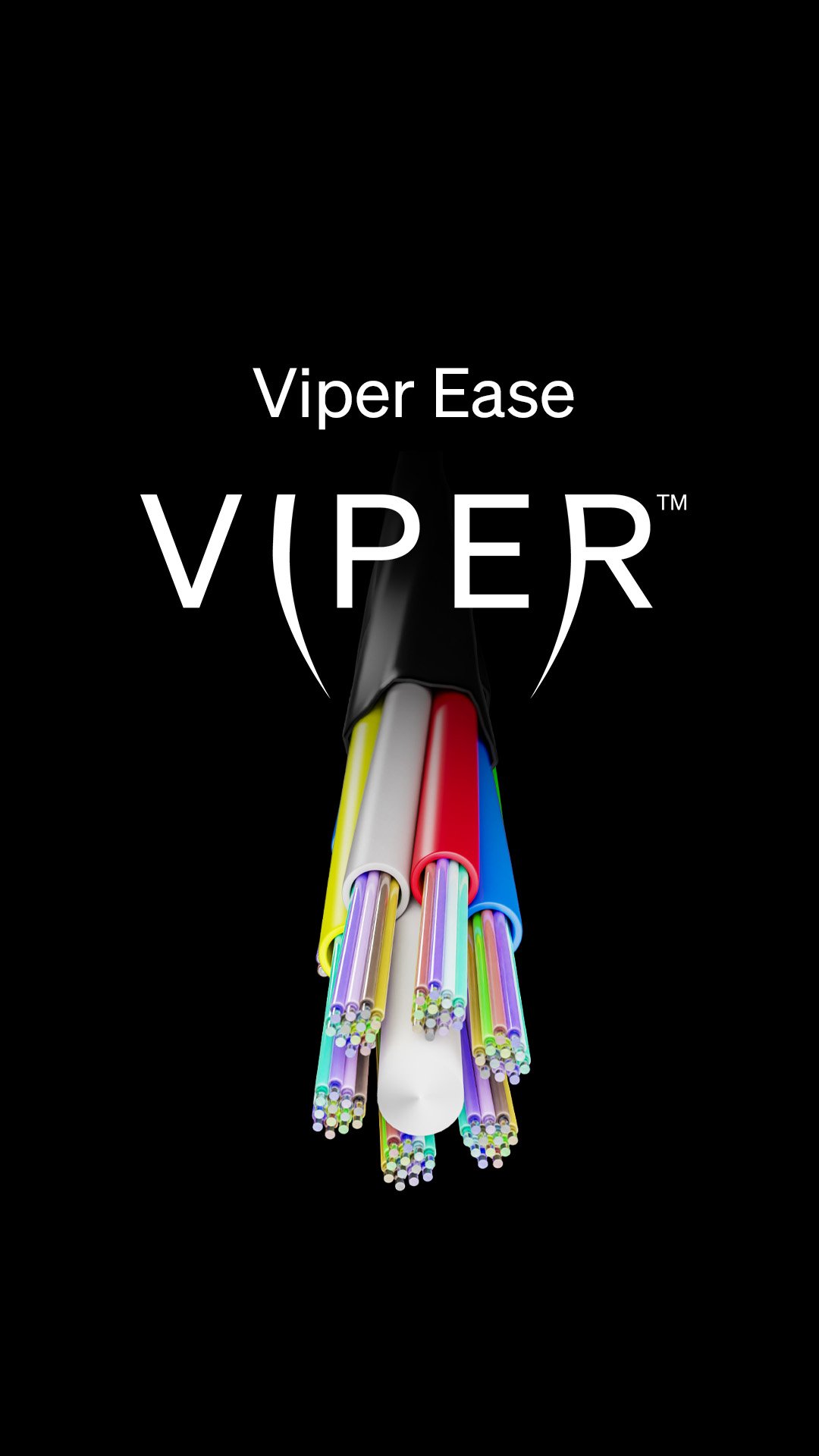
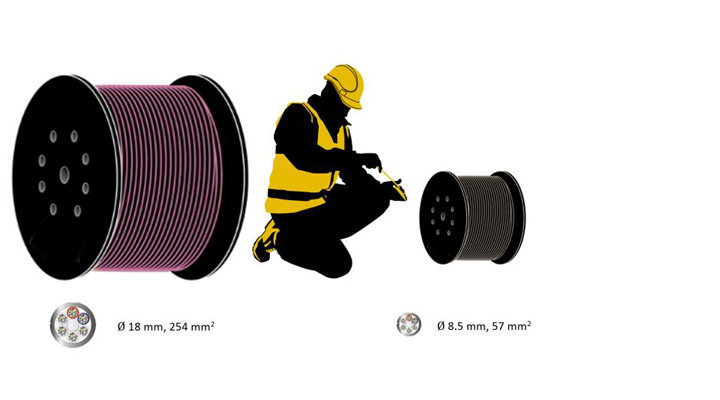
Installers often point to handling as one of the biggest practical differences between traditional cables and micro cables. Conventional transport cables are large, heavy, and harder to maneuver, especially in tight or uneven routes. A 432‑fiber traditional cable, around 18 mm in diameter, requires a much larger conduit and usually requires more people and equipment on site. A 432‑fiber Viper Core micro cable, at just 8.8 mm, is far lighter and easier to guide through ducts.
Less weight means fewer strain risks, smoother drum handling, and more predictable routing. This reduces physical effort and increases installation speed.
Longer installation distances reduce stops and setup time
Air‑blown micro cables can reach greater distances in a single installation, reducing the number of stops, manholes, and splicing points. Typical blowing distances often exceed 3,000 meters and can reach up to 12 km using sectional methods. Fewer interruptions keep teams moving and reduce the most time-consuming part of the job: repeated setup, handling, and splice preparation.
This is one of the clearest reasons installers prefer micro cabling. It simplifies the workflow and shortens deployment time without adding complexity.
Better performance reduces the need for active equipment
Although installers care about handling and efficiency, they also understand how optical performance shapes long-term operational work. Ultra-low-loss Viper Core micro cables support longer spans between amplifiers or repeaters, thanks to attenuation levels such as 0.18 dB/km for G.657A1/G.652D and 0.17 dB/km for G.654. A small improvement like 0.03 dB/km can make a measurable difference across long routes.
For installers, this reduces the number of active sites that need power, maintenance, and periodic visits. It also simplifies site preparation and lowers the overall complexity of the build.
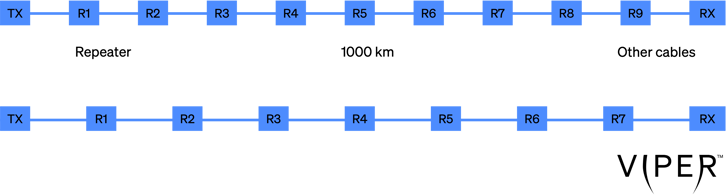 Active repeater reduction using ultra-low-loss cables.
Built-in scalability lowers future workload
Microduct assemblies allow installers to build capacity gradually instead of installing everything up front. A 4‑way 16/12 mm microduct bundle can accommodate an initial 288‑fiber cable, with space for additional capacity when needed. Doing the same with traditional conduits requires bigger ducts and more civil work, increasing both material and installation costs.
From an installer’s perspective, this means fewer large-duct installations, less heavy tooling, and fewer disruptions to the environment during future expansions.
Strong mechanical performance reduces installation risk
It is a common misconception that larger conduits or ducts are more durable. Many microducts offer higher ring stiffness than their larger counterparts, minimizing deformation during installation. Viper Core micro cables are engineered for durability with:
-
an operating range from -45 to +70 °C
-
tight bend performance, ≥70 mm
-
impact resistance that exceeds IEC requirements by three to five times
For installers, these characteristics translate to fewer damaged cables and less rework.
A smaller environmental footprint aligns with modern project demands
More installation contracts include environmental criteria. Micro cabling helps installers meet these requirements because the cable and ducts use less plastic and weigh significantly less. Traditional systems can use four to six times more material. Transport emissions tell a similar story, with large conduit systems reaching up to 15 times higher emissions than microduct solutions.
For installers, lighter materials reduce transport frequency, simplify logistics, and lower the project's overall environmental footprint.
Conclusion: Why micro cabling has become an installer favorite
Installers prefer micro cabling because it makes their work more efficient. It is easier to handle, quicker to install, and better suited for long routes with limited access points. It also supports future upgrades without major civil works and offers strong mechanical performance in challenging environments. Combined with environmental advantages, micro cabling gives installers and network owners a simpler, more predictable way to build transport networks.
Micro Cabling Systems – Driving the future of fiber optic transport networks
If you want the full technical depth behind these insights, download the whitepaper for a detailed breakdown.