




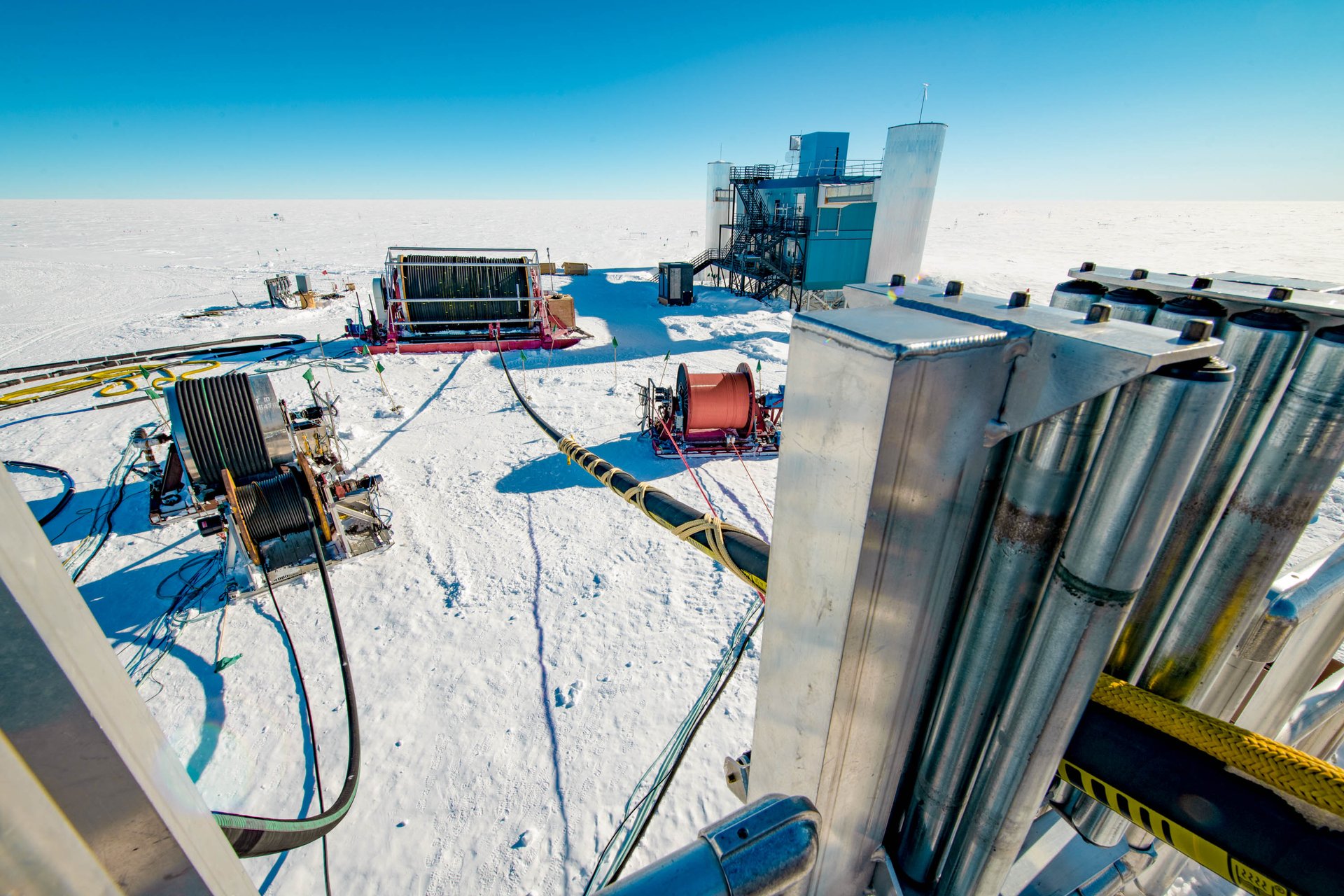
A few weeks back, the IceCube Neutrino Observatory completed its first major upgrade since the facility was built 15 years ago. The Hexatronic specialized cable is now deployed deep in the Antarctic ice to support IceCube as it enters its next phase of neutrino research.
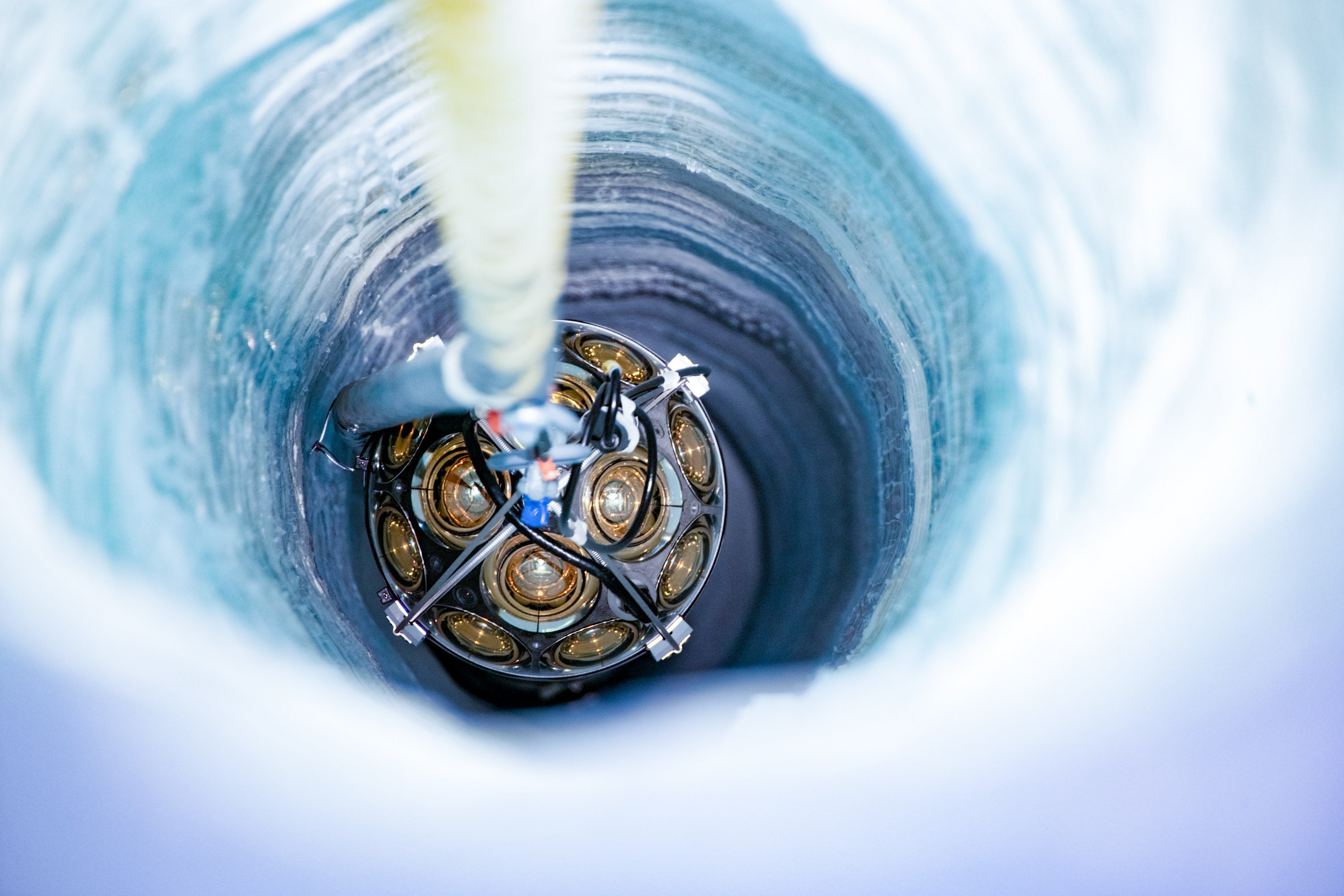
IceCube is located at the Amundsen–Scott South Pole Station and is one of the world’s most advanced scientific observatories. The detector, deep within the Antarctic ice, uses thousands of optical sensors to capture faint flashes of light produced when neutrinos interact with the ice. The system transmits these signals to the surface via customized Hexatronic cables. Researchers then analyze the data to better understand some of the universe’s most extreme phenomena.
From delivery to the South Pole to deployment in the Antarctic ice
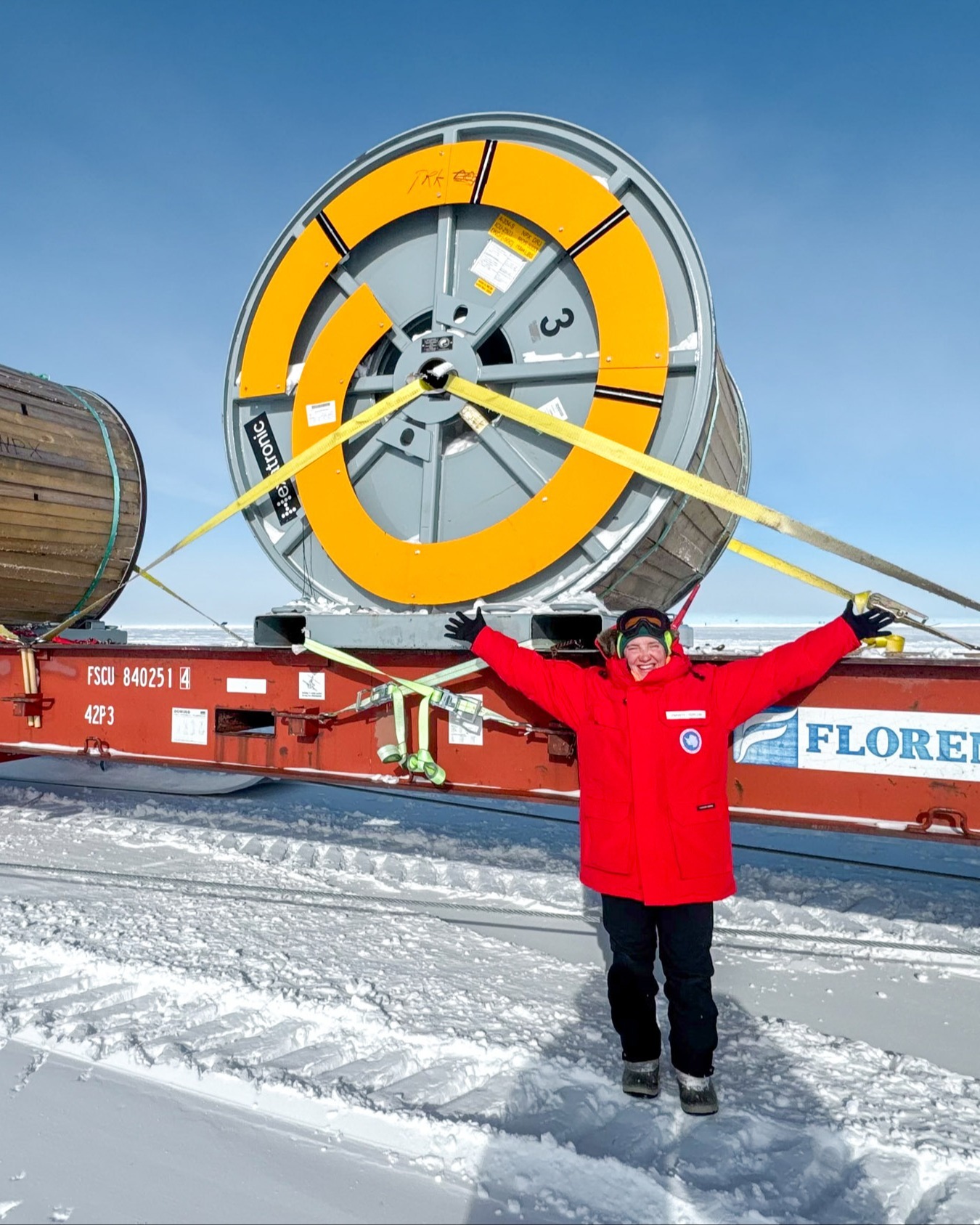
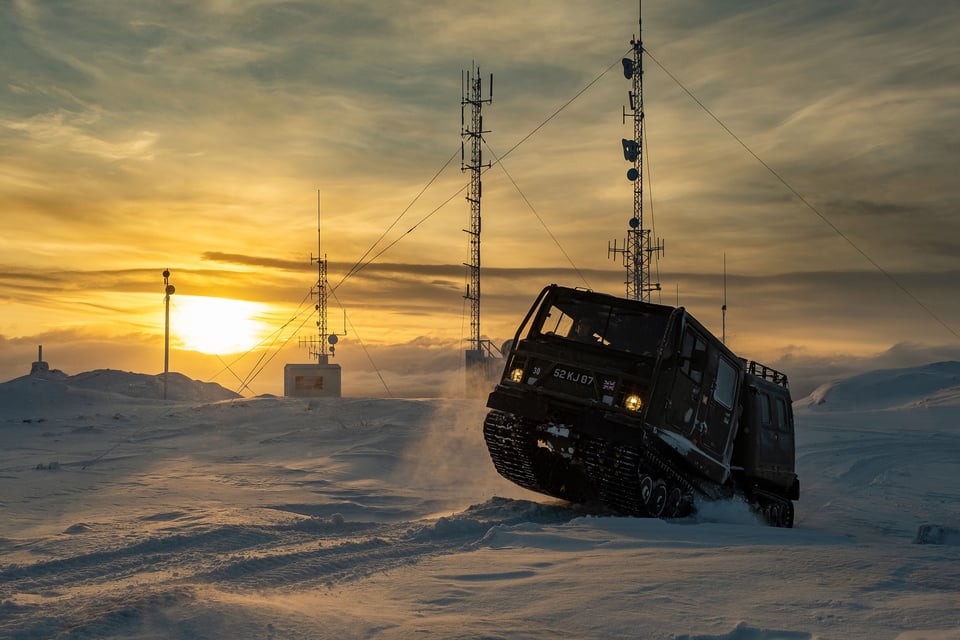
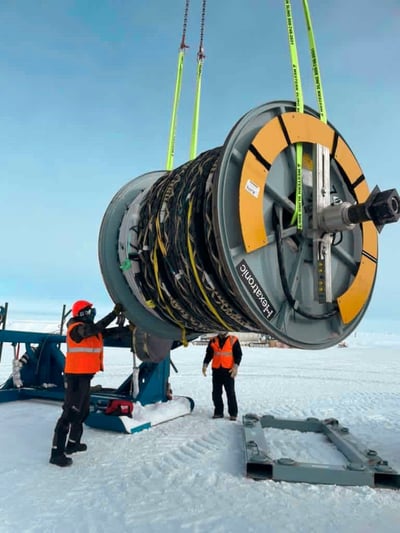
In 2025, Hexatronic completed delivery of the highly specialized cable system to Michigan State University for IceCube’s upgrade. The team transported the cable across the Antarctic landscape to the South Pole and tested it on site.
Following the successful deployment of the IceCube Upgrade, the cable is now permanently installed beneath the ice, supporting enhanced measurement capabilities.
Designed for extreme conditions and precise performance
The IceCube Upgrade adds new strings with more closely spaced, high‑sensitivity optical sensors. This places high demands on the underlying infrastructure. Cables must maintain signal integrity over distances of several kilometers while operating at temperatures as low as –80°C.
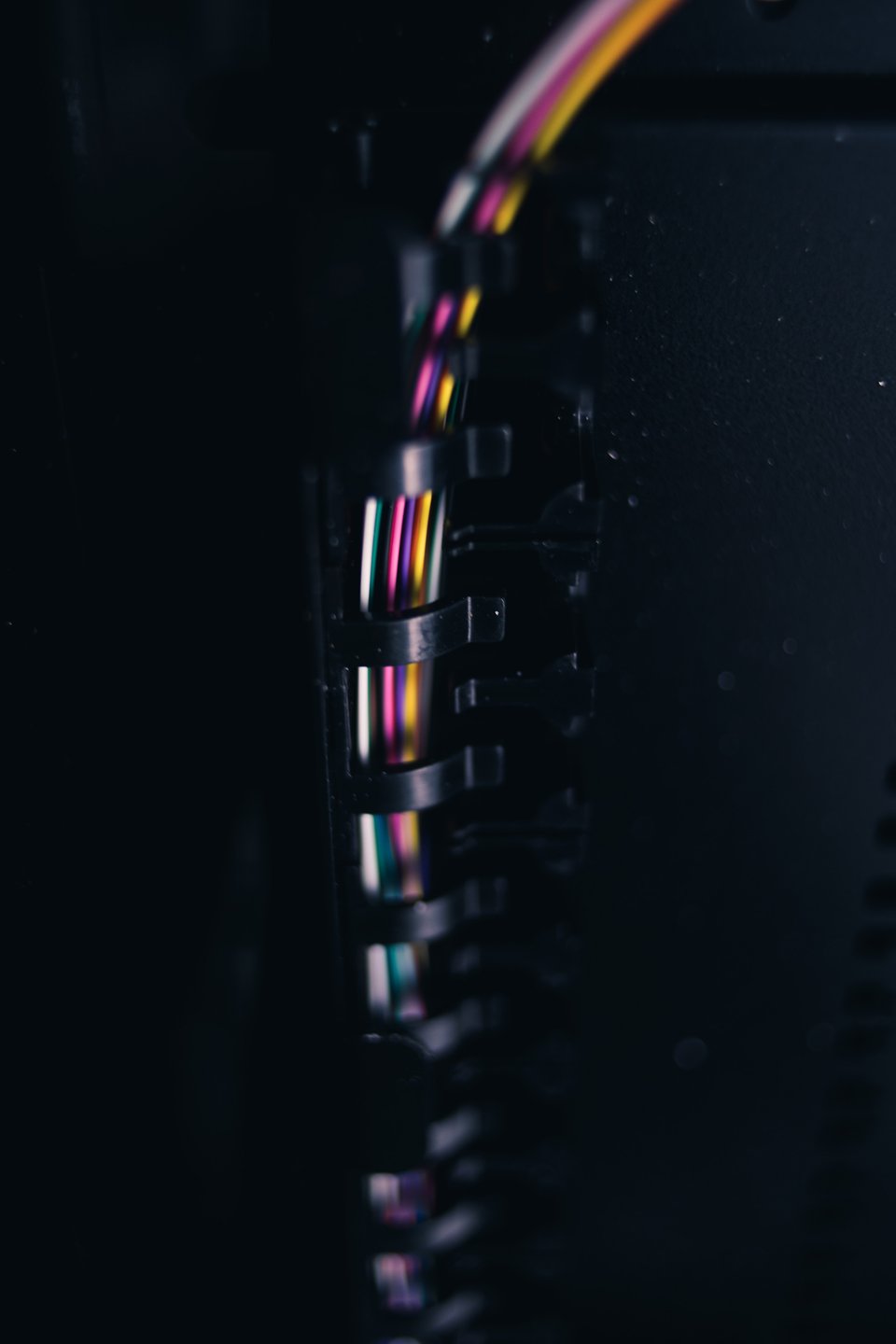
Just as in earlier phases of the IceCube project, Hexatronic developed a solution specifically to meet these requirements. The cable is designed to deliver ultra-low signal loss and precise timing, ensuring that data from the sensors is transmitted accurately and consistently over long periods. In an environment where maintenance is extremely difficult, long-term reliability is essential.
Specialized cables supporting world-class science
With the upgrade now installed, IceCube is entering a new phase of capability. The new sensor strings are designed to enable researchers to study neutrinos with greater accuracy, improving their ability to determine where these particles come from and how they behave as they pass through the Earth.
Improved calibration from the upgrade will also help researchers refine their understanding of the detector and the surrounding ice. This makes it possible to re‑examine more than a decade of previously collected data with greater accuracy, potentially revealing new insights from observations already recorded.
Beyond neutrino research
The deployment also provided a rare opportunity beyond neutrino research. In collaboration with the U.S. Geological Survey, the upgrade team on-site installed two seismometers beneath the Antarctic surface. These are the deepest seismometers ever deployed and will allow scientists to monitor seismic activity with a level of detail not previously possible. The drilling process also made it possible to collect water samples from deep within the ice. These samples are now being studied by microbiologists in the United States, who are investigating whether life can exist in such extreme and isolated environments.
Partnerships across borders
The IceCube Upgrade is the result of close collaboration between researchers, universities, and organizations from around the world. For Hexatronic, the project was carried out in partnership with Michigan State University, whose trust in our engineering expertise enabled us to deliver a solution capable of performing under some of the most demanding conditions on Earth.
The project also builds on long‑standing collaboration with the scientific community. Prior to this upgrade, Hexatronic worked closely with Uppsala University in Sweden, supporting earlier phases of the IceCube build with specialized cabling designed for precision, reliability, and extreme environments.
Advanced cable engineering plays a critical role in large‑scale scientific infrastructure. From delivery to deployment, the IceCube Upgrade underscores the importance of solutions that perform exactly as intended, where long‑term reliability and accuracy are essential.
As IceCube moves toward its next phase of research, Hexatronic is proud to contribute to a global collaboration that continues to push the boundaries of scientific discovery.
Photo cred:
Yuya Makino, IceCube/NSF
Colton Hill, IceCube/NSF