



An offshore wind export cable can run for hundreds of kilometers and stay on the seabed for decades. Operators cannot inspect it visually. A single fault can take weeks to locate and repair, and the lost generation adds up fast.
That is one of the reasons why almost every modern high-voltage subsea cable carries optical fiber inside it. The fiber carries data and allows the cable to report its own health. That matters more every year, as the energy transition moves more power offshore and across borders. Hexatronic has been designing these fiber units in close collaboration with power cable manufacturers for more than twenty years.
What integrated fiber actually is
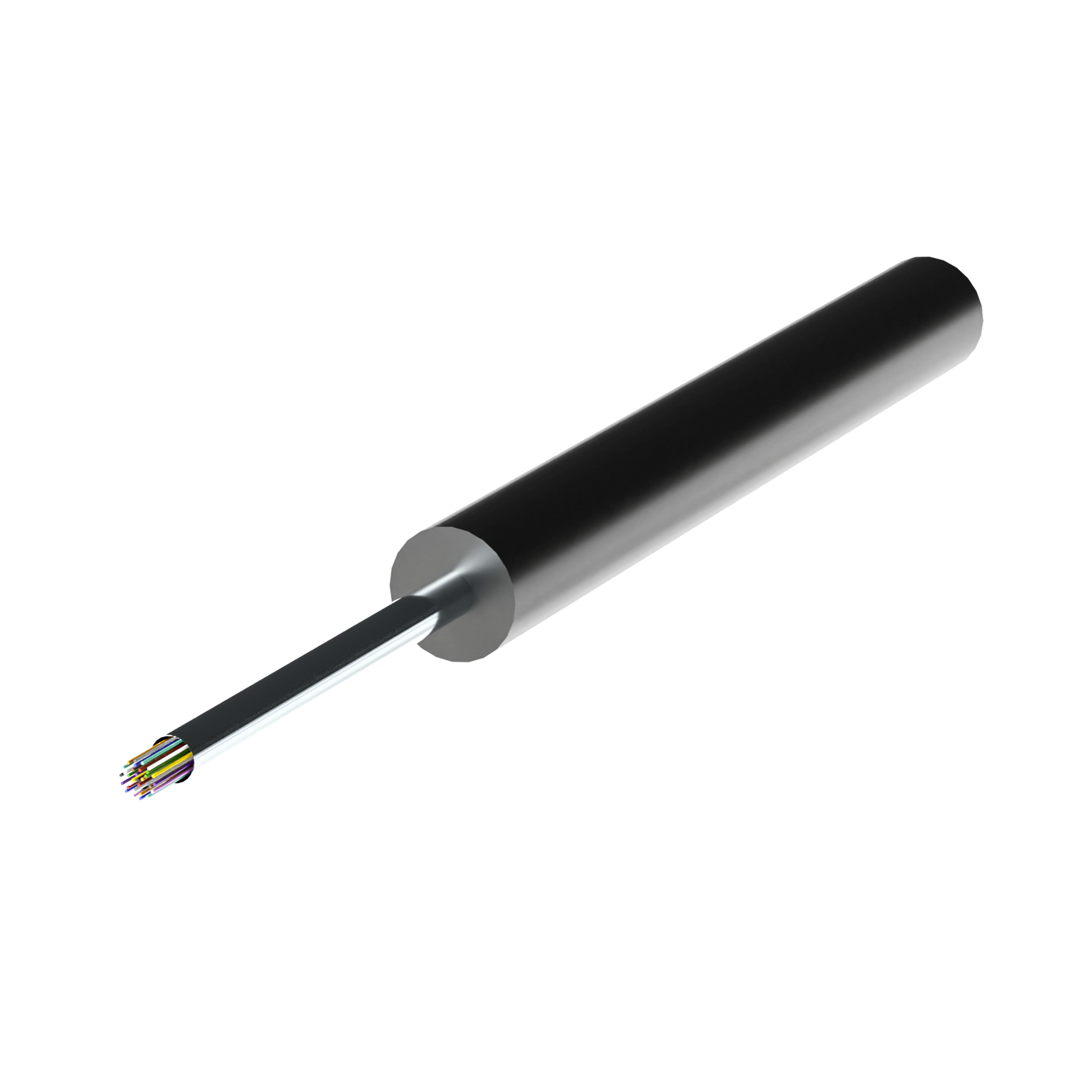
Inside a high-voltage AC or DC cable, the optical fiber sits in a sealed stainless-steel tube, usually at the center of the cable or within the conductor lay-up. The power cable manufacturer embeds the unit during production, so the finished cable carries power and signal in one structure. The tube keeps the fiber accessible for splicing and termination, and it does not compromise the electrical or mechanical integrity of the cable.
The fiber unit has to survive everything the power cable survives: hydrostatic pressure at depths up to 2,000 meters, conductor temperatures well above standard telecom limits, longitudinal forces during cable pulling, tight bending radii, and decades of thermal cycling. Our Hexatronic GJL family takes up to 96 fibers per unit through that envelope while keeping optical attenuation low and predictable.
Submarine Optical Cable Part
-
For integration into hybrid submarine cables
-
Extremely robust
-
Depths down to 2000 m
-
12-96 fibers
Why do offshore wind and HVDC operators care?
Two reasons: communications and sensing.
Every offshore wind farm needs a high-bandwidth communications backbone between the turbines and the onshore substation: SCADA, protection signaling, and condition monitoring. Embedding the fiber inside the export cable removes the cost and risk of laying a separate telecoms cable along the same route.
The sensing role is newer, and for many operators it is the bigger value driver. The same fiber acts as a continuous sensor along the full length of the cable when connected to a standard interrogator. Three techniques are now in routine use:
-
Distributed temperature sensing (DTS) uses Raman backscatter to map temperature along the cable, so operators can find hotspots and prevent thermal overload.
-
Distributed acoustic sensing (DAS) uses Rayleigh backscatter to detect vibration, identifying trawler interaction, anchor strikes, and seabed movement in real time.
-
Distributed temperature strain sensing (DTSS) uses Brillouin to detect fatigue, slippage, and seabed erosion before they affect the cable’s long-term stability.
Together, they turn the cable from a passive asset into a live data source.
What makes the fiber survive that environment
Three design choices do the heavy lifting. The stainless-steel tube isolates the fibers from mechanical and thermal stress on the conductor. Water-blocking gels or dry elements stop longitudinal water ingress if the outer jacket is damaged. Coating and coupling are tuned to the sensing job: loosely coupled fibers minimize strain transfer when only temperature matters, while tightly coupled fibers convert mechanical strain into a measurable optical signal when strain sensing is the goal.
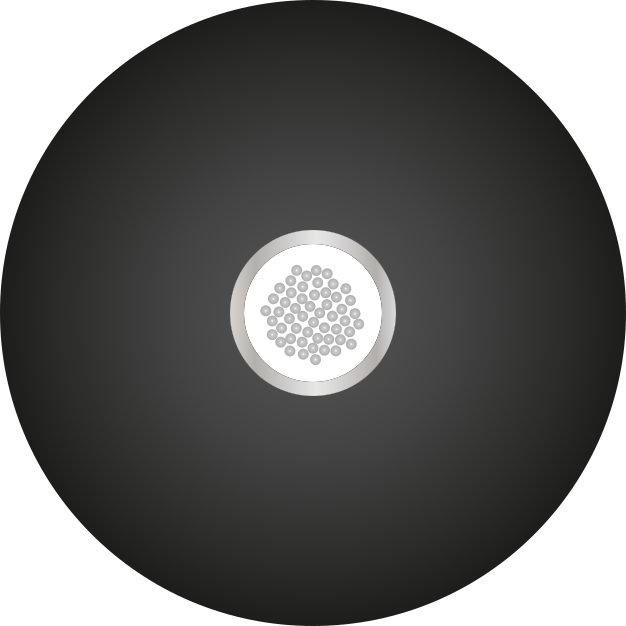
Cross-section of a submarine optical cable for integration
Figure 1. Submarine optical cable part based on a hermetically sealed stainless tube. Inside the tube, the fibers are free to move within the thixotropic water-blocking compound. The steel tube is protected by a semiconductive polyethylene jacket.
Beyond the fiber unit
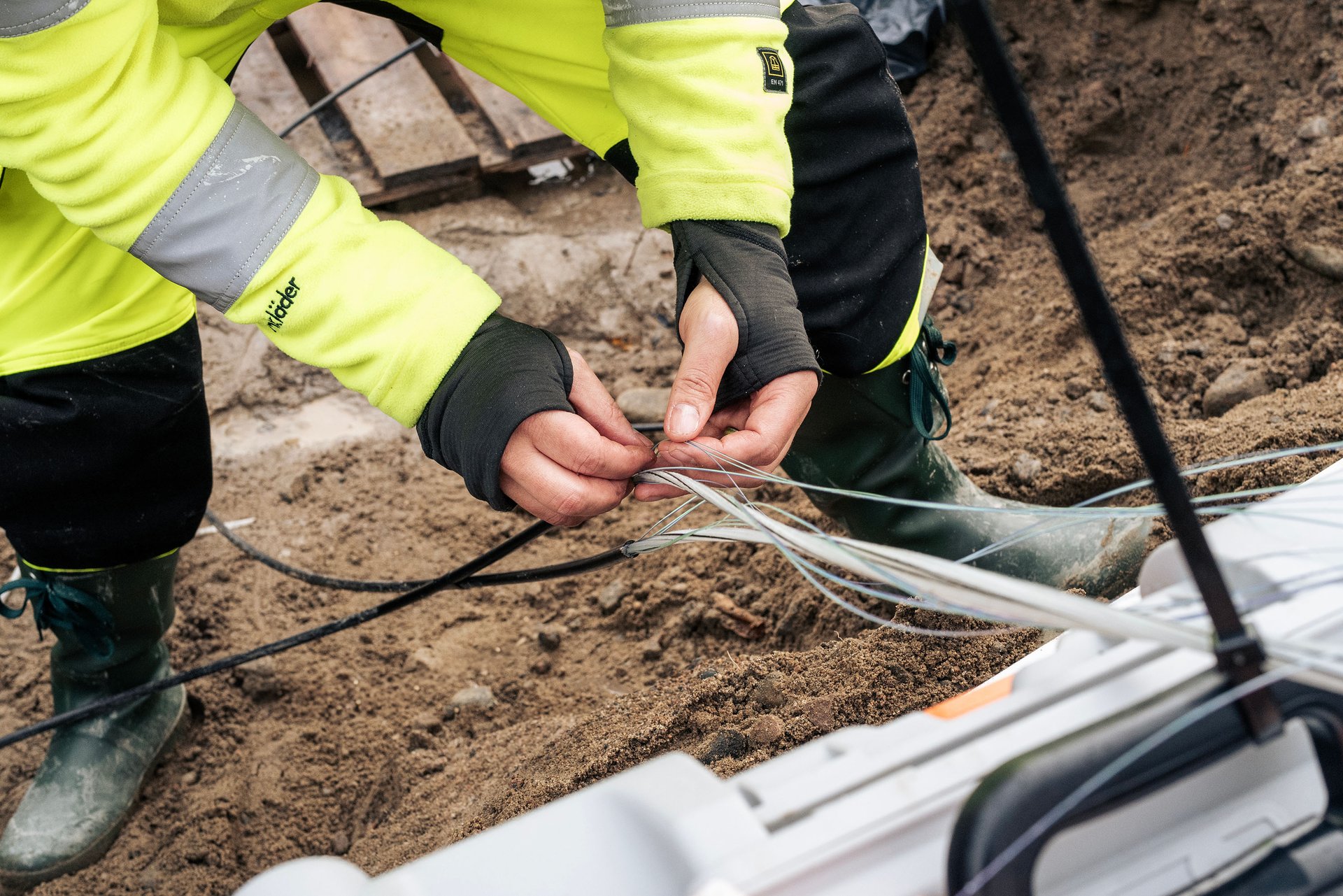
A reliable optical path needs more than the unit inside the cable. Joint closures preserve fiber integrity at every splice. Termination hardware handles the transition into offshore substations and onshore landing points. Microduct systems route fiber safely inside joint housings. Installation tooling and field training help cable manufacturers and EPC partners deliver SCADA and sensing performance on day one rather than chasing it during commissioning.
Where this technology is heading
The drivers are scale and distance. Offshore wind farms are getting larger and further from shore. HVDC interconnectors are crossing more borders. Smart-grid programs are pushing real-time data deeper into onshore networks. Each of these trends raises the value of having communications and sensing built into the power cable rather than bolted on afterward.
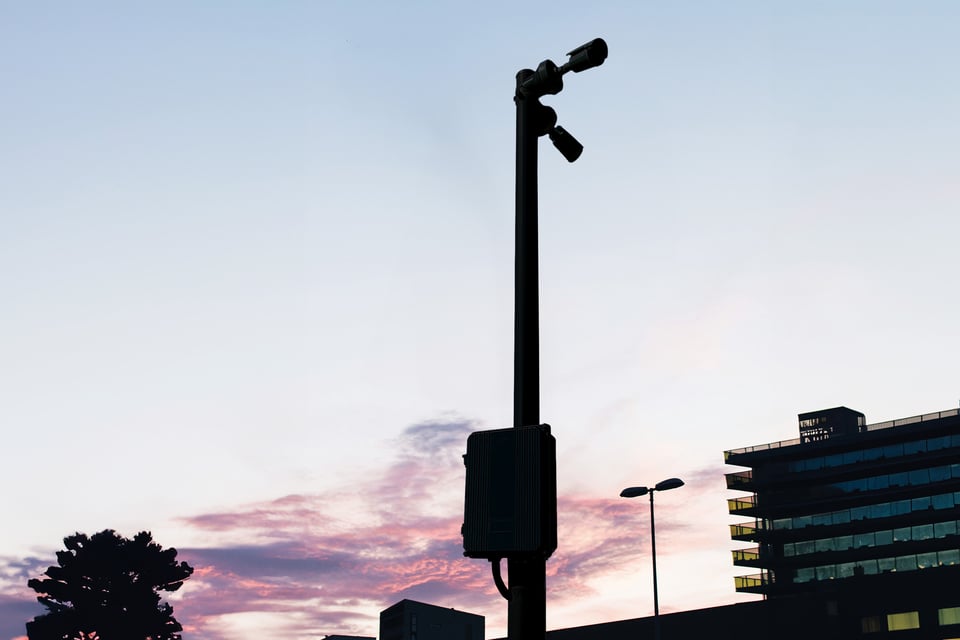
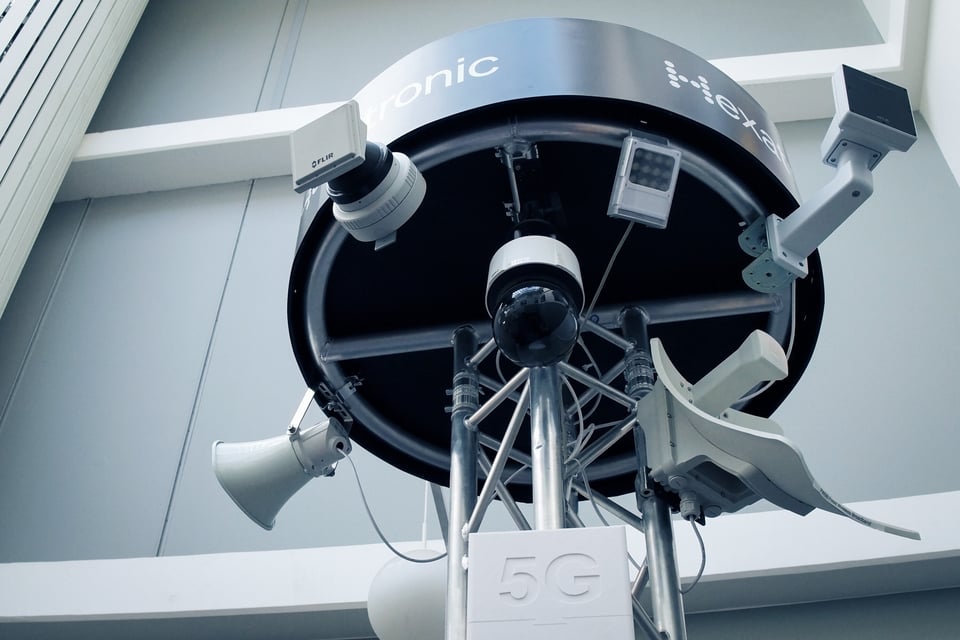
The same logic is moving into urban infrastructure through hybrid power-and-fiber products that deliver electricity and high-speed data together to 5G nodes, sensors, and CCTV.
Twenty years of close work with power cable manufacturers has given us a clear view of what these systems demand. The fiber inside a high-voltage cable is rarely the headline component, but it is one of the parts that decides whether a wind farm or an interconnector earns out across its full design life. It is a quiet contribution to the energy transition, and one we have been making since the early days of offshore wind.
Tobias Borg has spent eighteen years at Hexatronic working on optical components for high-voltage power cables.